Home/All sheets
Specimen index
Every published sheet, ordered by group and number. Use the hardness column to narrow the field first: what a knife cuts sits in the upper part of the list, what scratches glass sits in the lower part.
| Sheet | Name | Formula | Mohs | |
|---|---|---|---|---|
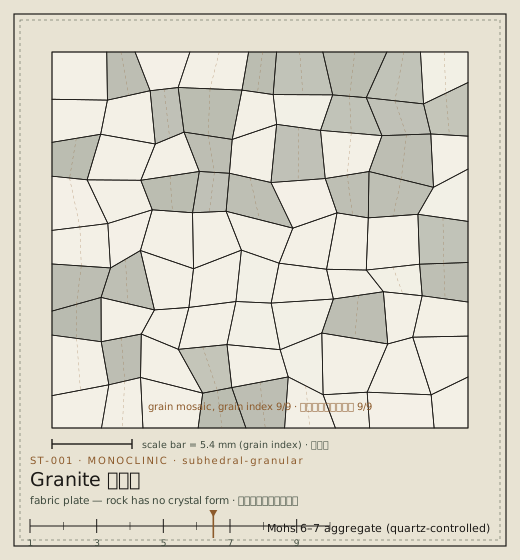
| ST-001 Igneous | Granite花岗岩 Granite is the rock most people name correctly and describe least accurately. It is the coarse, light-toned intrusive rock built from quartz, alkali feldspar and a little mica — but the iden Hand specimen | Quartz SiO₂ + alkali feldspar (KAlSi₃O₈) + plagioclase + mica | 6–7 aggregate (quartz-controlled) | |
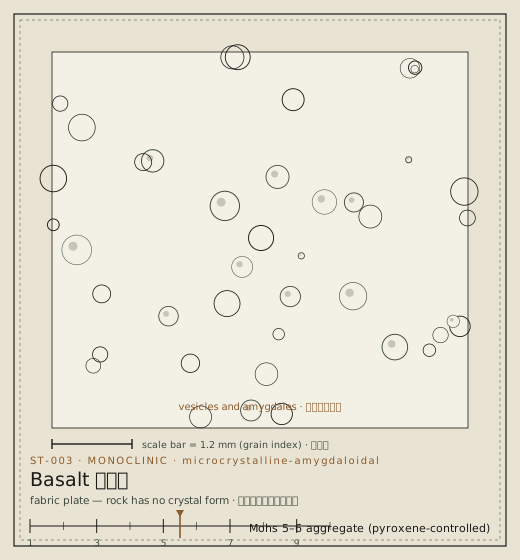
| ST-003 Igneous | Basalt玄武岩 Basalt is the most common rock on the planet's surface and one of the hardest to describe from a single specimen, because almost everything diagnostic is too small to see. It is dark, fine-g Hand specimen | Plagioclase (Ca-rich) + clinopyroxene + olivine; SiO₂ about 45–52 wt% | 5–6 aggregate (pyroxene-controlled) | |
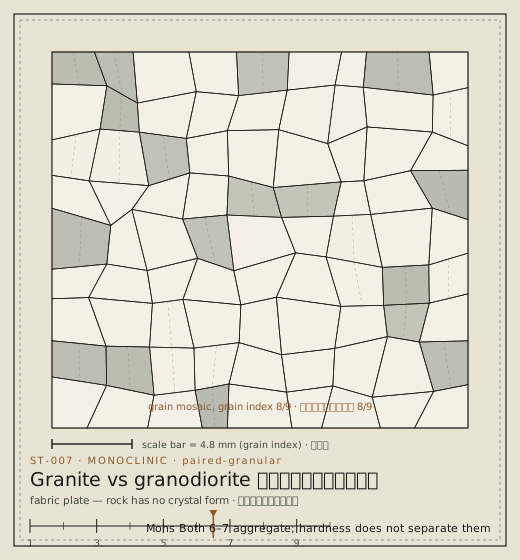
| ST-007 Igneous | Granite vs granodiorite花岗岩与花岗闪长岩对照 These two rocks sit next to each other in every classification chart and are routinely confused in the field, because they share their texture, their grain size, most of their minerals and t Comparison sheet | Difference is in the feldspar budget: alkali feldspar-dominant versus plagioclase-dominant | Both 6–7 aggregate; hardness does not separate them | |
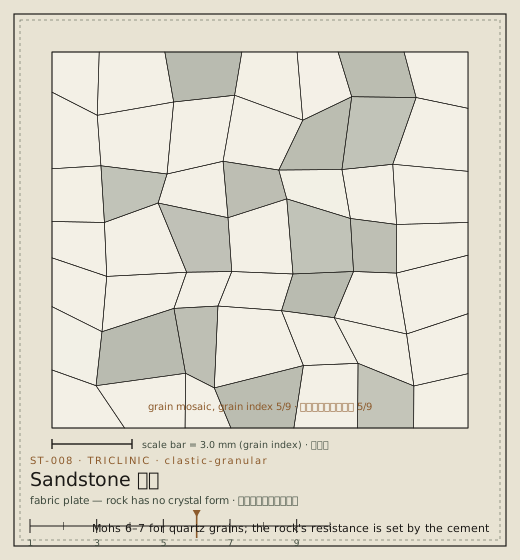
| ST-008 Sedimentary | Sandstone砂岩 Sandstone is a photograph of a current. Every grain in it was moved by water or wind, and three measurements taken in the field — grain size, sorting and roundness — tell you how far it trav Hand specimen | Quartz grains (SiO₂) with a cement of silica, calcite, iron oxide or clay | 6–7 for quartz grains; the rock's resistance is set by the cement | |
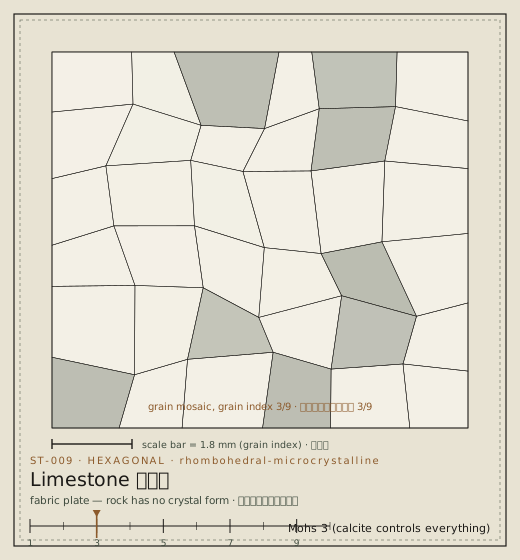
| ST-009 Sedimentary | Limestone石灰岩 Limestone is the easiest of the common rocks to identify and the hardest to identify well, because one drop of acid answers the first question and leaves every interesting question untouched Hand specimen | CaCO₃, mostly as calcite, with variable clay, silica and magnesium | 3 (calcite controls everything) | |
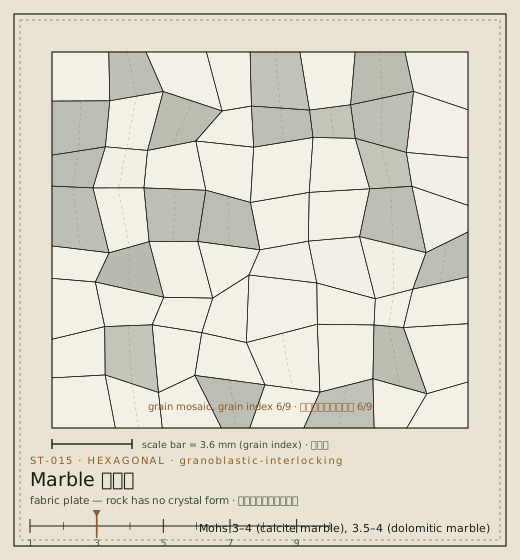
| ST-015 Metamorphic | Marble大理岩 Marble is limestone that has been cooked. Given enough heat and pressure, calcite grains recrystallise into a dense interlocking mosaic, the fossils and bedding are destroyed, and the rock b Hand specimen | Recrystallised CaCO₃; dolomitic marble is CaMg(CO₃)₂ | 3–4 (calcite marble), 3.5–4 (dolomitic marble) | |
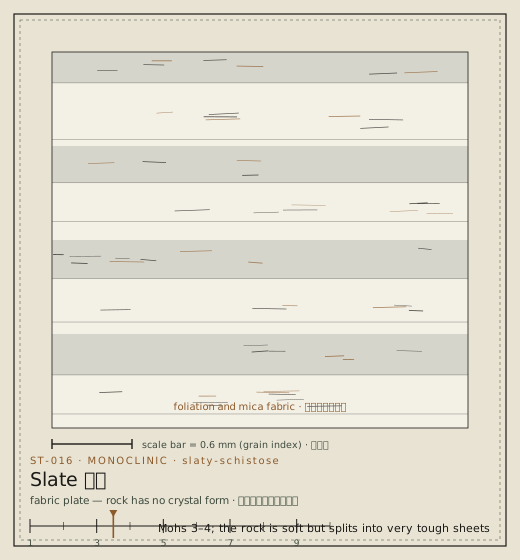
| ST-016 Metamorphic | Slate板岩 Slate is the grade of metamorphosed mud that industry was built on: it splits into thin waterproof sheets, which made it the roofing material of eighteenth- and nineteenth-century Europe and Hand specimen | Fine-grained white mica (sericite), chlorite and quartz after a shale protolith | 3–4; the rock is soft but splits into very tough sheets | |
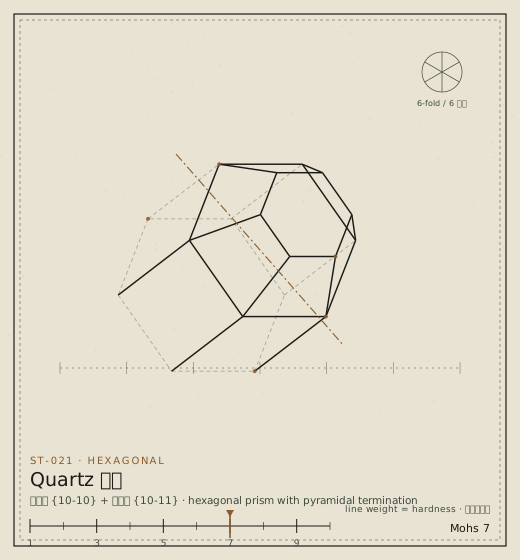
| ST-021 Minerals | Quartz石英 Quartz is the most useful single mineral in field identification, not because it is interesting to look at but because of what its hardness does to everything else. At 7 on Mohs' scale it si Mineral species | SiO₂ | 7 | |
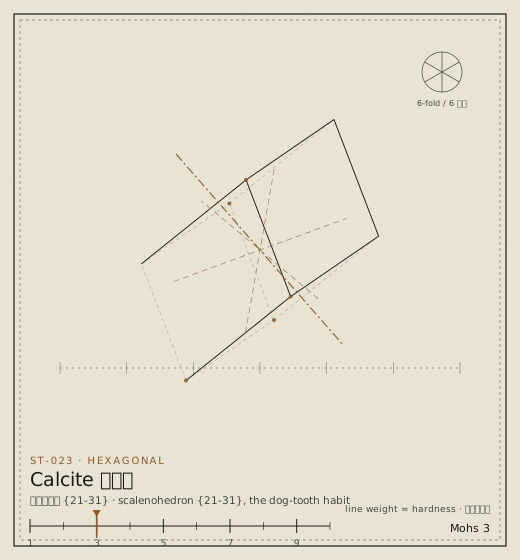
| ST-023 Minerals | Calcite方解石 Calcite is the reference mineral for hardness 3, the fizz in an acid test, and above all for cleavage — three perfect directions that break a crystal into rhombs and make calcite one of the Mineral species | CaCO₃ | 3 | |
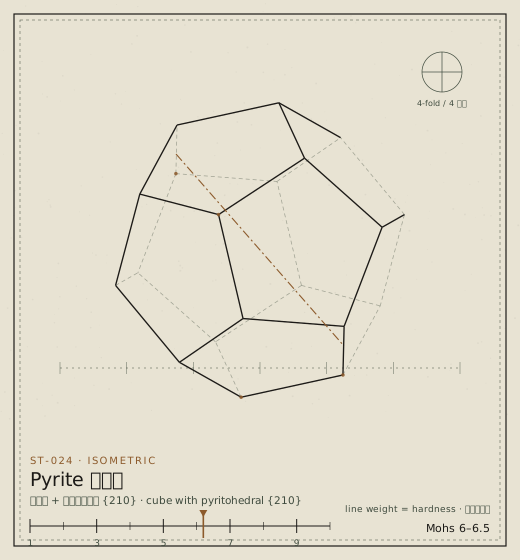
| ST-024 Minerals | Pyrite黄铁矿 Pyrite is the mineral that built the phrase "fool's gold", and the deception works because pyrite genuinely looks metallic and golden in a stream bed. It is iron disulfide, the most common s Mineral species | FeS₂ | 6–6.5 |