Igneous rocks and minerals
Cooling history written in grain size: coarse where the melt ponded underground, glassy where it was chilled at the surface.
| Sheet | Name | Formula | Mohs | |
|---|---|---|---|---|
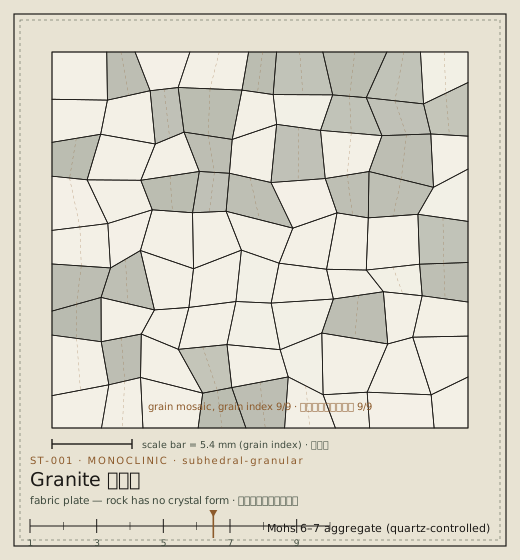
| ST-001 Igneous | Granite花岗岩 Granite is the rock most people name correctly and describe least accurately. It is the coarse, light-toned intrusive rock built from quartz, alkali feldspar and a little mica — but the iden Hand specimen | Quartz SiO₂ + alkali feldspar (KAlSi₃O₈) + plagioclase + mica | 6–7 aggregate (quartz-controlled) | |
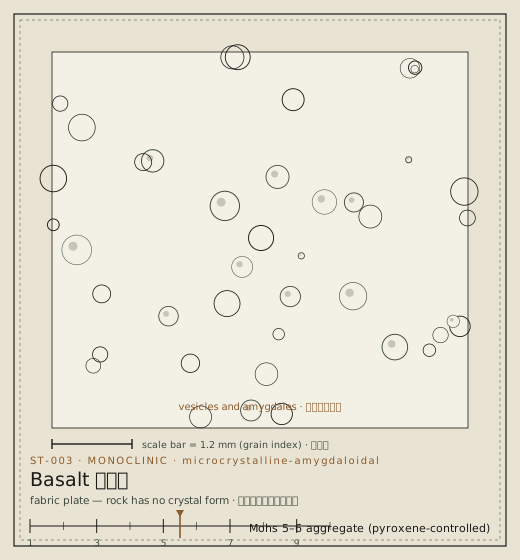
| ST-003 Igneous | Basalt玄武岩 Basalt is the most common rock on the planet's surface and one of the hardest to describe from a single specimen, because almost everything diagnostic is too small to see. It is dark, fine-g Hand specimen | Plagioclase (Ca-rich) + clinopyroxene + olivine; SiO₂ about 45–52 wt% | 5–6 aggregate (pyroxene-controlled) | |
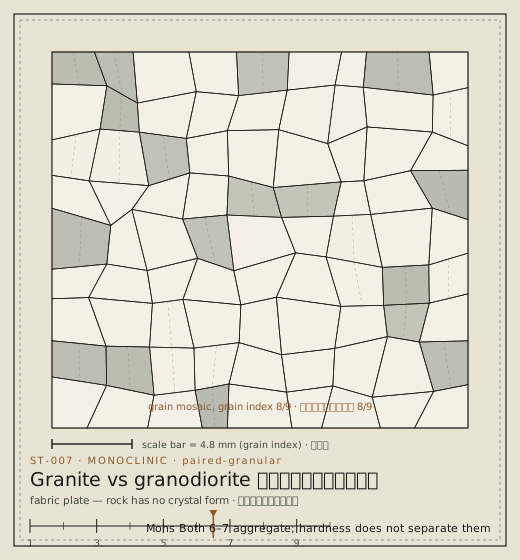
| ST-007 Igneous | Granite vs granodiorite花岗岩与花岗闪长岩对照 These two rocks sit next to each other in every classification chart and are routinely confused in the field, because they share their texture, their grain size, most of their minerals and t Comparison sheet | Difference is in the feldspar budget: alkali feldspar-dominant versus plagioclase-dominant | Both 6–7 aggregate; hardness does not separate them |